




Abibitumi ID Ecosystem
Sign in

Author: Abibiwiase Admin

  • Designing a Festival Without Borders: AAFF’s Hybrid Experience

    Designing a Festival Without Borders: AAFF’s Hybrid Experience

    A hybrid festival is not well designed simply because a camera is pointed at a stage. Physical and online audiences need legible information, coherent visual identity, reliable pathways into the program, and a sense that they are participating in the same cultural event. The Abibitumi Abibifahodie Film Festival 2026, running October 16–18, makes that challenge part of its institutional work.

    AAFF connects an Accra-based gathering with online participation across Abibiman and the diaspora. That creates a layered design problem. The festival identity must remain recognizable on a cinema screen, a phone, a social card, and a program page. Film information must be readable across different devices. Discussions need structures that allow remote audiences to follow and contribute without turning the physical gathering into background scenery.

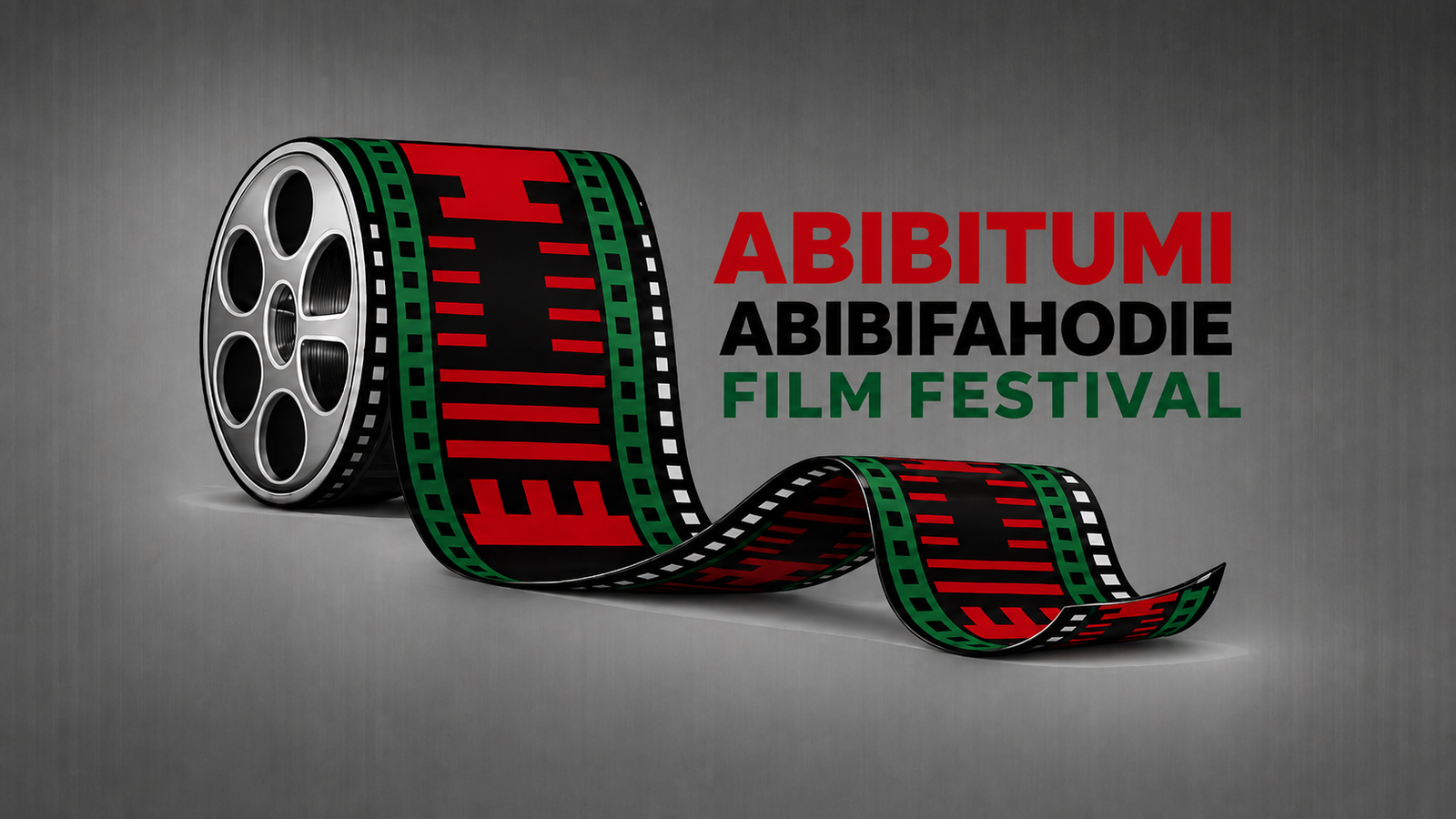
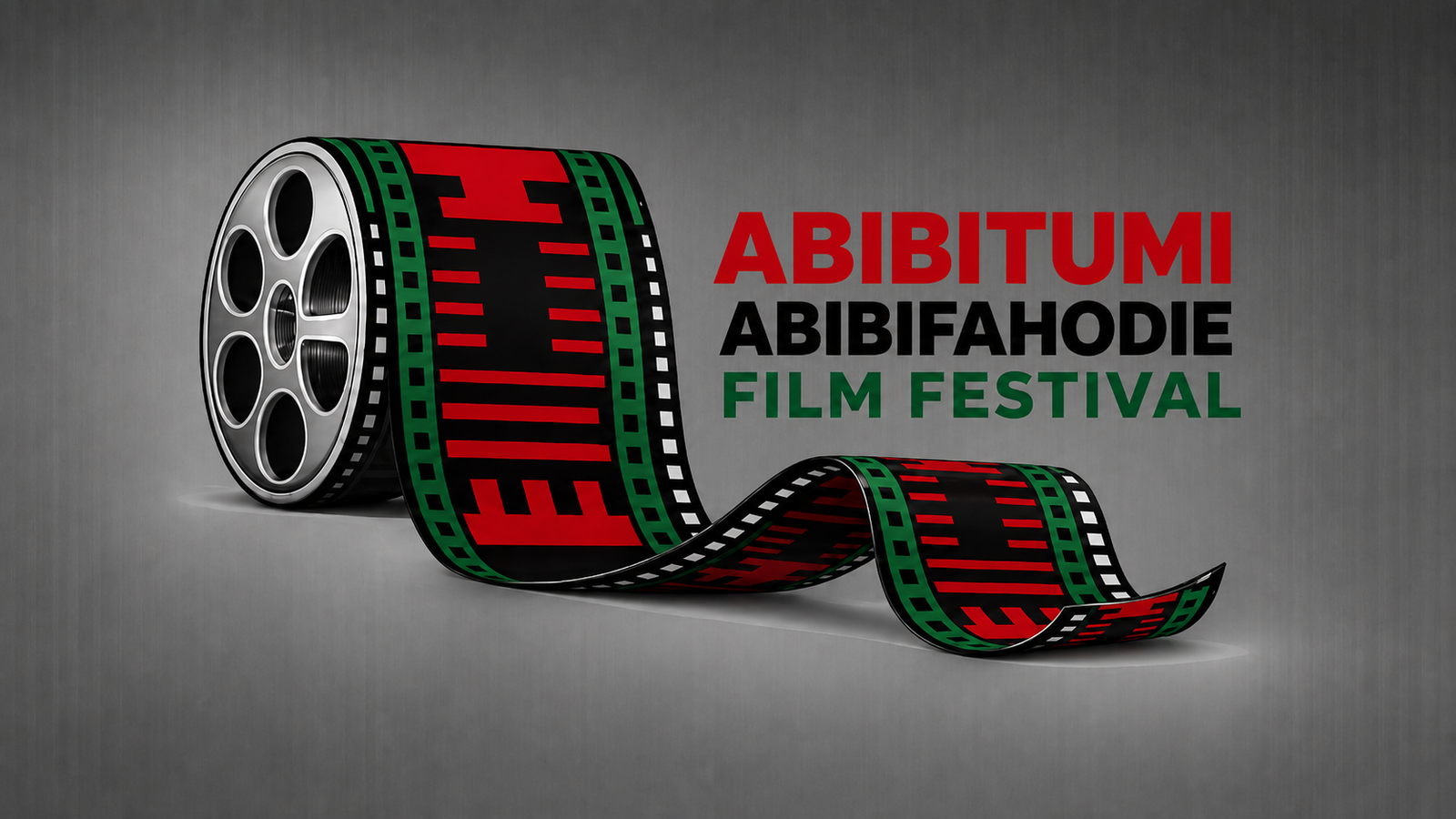
    The official AAFF identity addresses that challenge with a reel and patterned filmstrip rendered in red, black, and green. The mark is not decoration pasted onto unrelated material. It should function as a consistent signal across programming, editorial coverage, access information, and the digital festival environment.

    Good event design also protects accuracy. Dates, links, venue wording, and access details should flow from current authoritative sources rather than old exports. A polished graphic carrying stale facts is still a failed design.

    AAFF’s program includes feature, short, student, documentary, animation, and AI-infused work. Follow the official festival site to see how the visual system and hybrid experience develop toward October 16–18.
  • Designing Cultural Infrastructure: What a Film Festival Builds Beyond the Screen

    Designing Cultural Infrastructure: What a Film Festival Builds Beyond the Screen

    A film festival is not simply a stack of screenings. It is a designed system of attention: how people discover work, enter a space, meet one another, discuss what they have seen and remain connected after the lights come up.

    Film, memory and liberation

    The festival runs October 16?18, 2026, connecting audiences in Accra and online. Its programme brings multiple generations and forms of Afrikan-centered cinema into conversation, including longer works, documentaries, shorts, student projects and emerging digital approaches.

    The deeper question is not simply whether Black people are visible. It is who has the power to frame memory, interpret struggle and decide which futures deserve to be seen. A festival built on Afrikan ground allows creators and audiences to approach those questions together.

    • Dates: October 16?18, 2026
    • Access: Accra and online
    • Purpose: Afrikan-centered cinema, cultural memory and narrative sovereignty

    Why this gathering matters

    Narrative sovereignty requires pathways, not only content. Films need context, creators need networks that outlast a premiere, and communities need repeated opportunities to gather around shared cultural questions.

    Save the dates and follow the official festival site as the programme develops. Come ready not only to watch, but to discuss, connect and help strengthen the institutions through which Afrikan stories can live.

    Visit the official Abibitumi Abibifahodie Film Festival website for the developing programme and current access information.

  • Designing Return Through Language: Black August Twi Classes Begin

    Designing Return Through Language: Black August Twi Classes Begin

    Good design begins with context. Whether the work is a home, a service, an institution or a return to Ghana, the strongest outcomes come from understanding the people and relationships the design must serve. Language is one of the most important ways that context becomes visible.

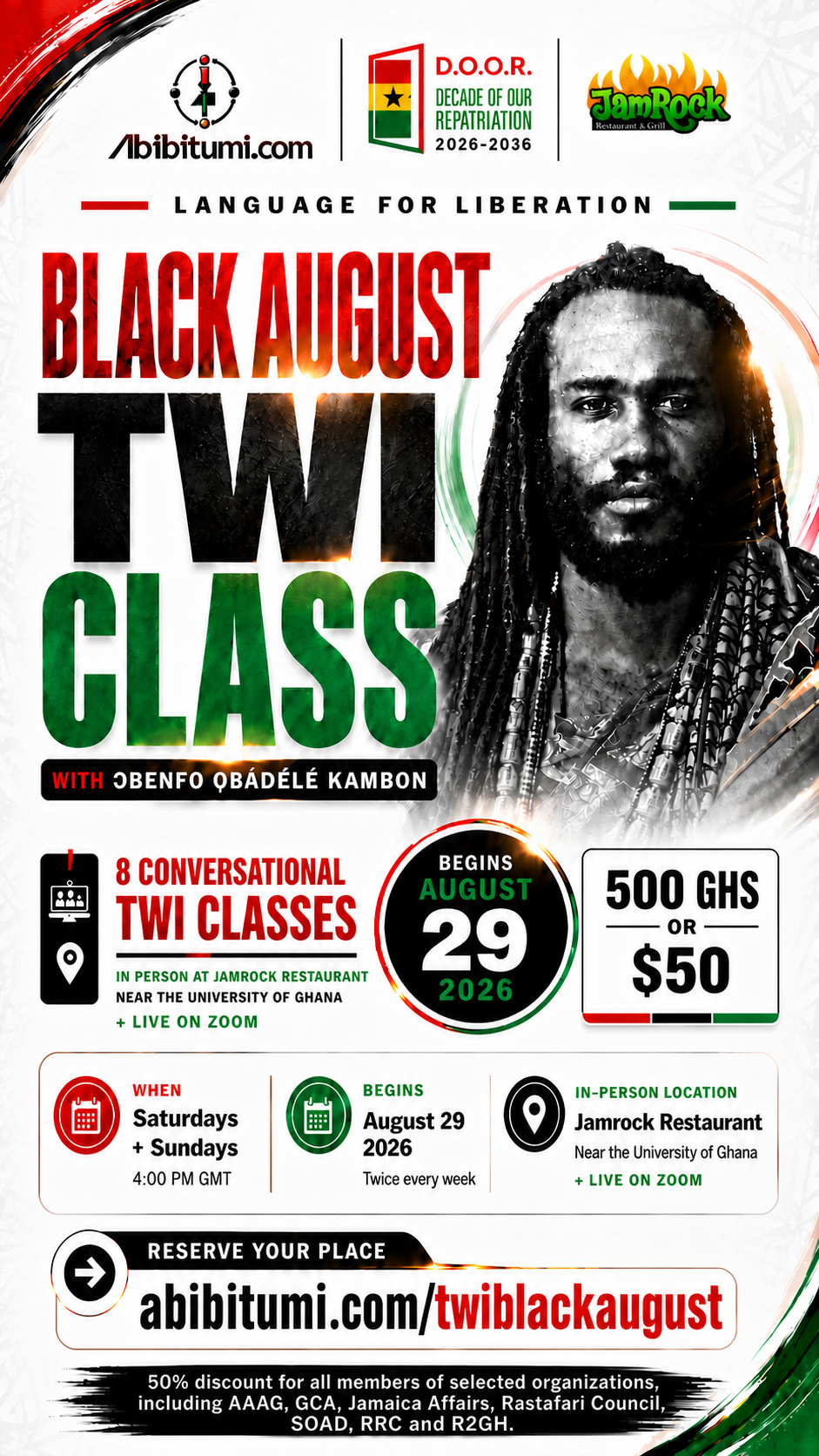
    Beginning Saturday, August 29 at 4:00 p.m. GMT, Abibitumi is offering eight conversational Twi classes with cultural orientation. Learners can attend at Jamrock Restaurant at the University of Ghana or participate online through Zoom.

    • Begins: Saturday, August 29, 2026 at 4:00 p.m. GMT
    • Attend: Jamrock Restaurant at the University of Ghana or online via Zoom
    • Program: Eight classes with Twi language instruction and cultural orientation
    • Cost: 500 GHS or US$50
    • Member offer: 50% off for members of selected organizations

    Language is part of the structure

    Repatriates often plan carefully for land, housing, work and investment while leaving language to chance. That omission can keep daily decisions dependent on translation and narrow the circle of people with whom a newcomer can build trust. A structured course turns language from a future intention into a present practice.

    Ɔbenfo Ọbádéle Kambon brings university-level linguistic training and a focus on Akan varieties including Asante Twi, Akuapem Twi and Fante. The program emphasizes conversational use alongside cultural orientation, because words only make sense inside relationships, histories and expectations.

    For anyone designing a long-term life in Ghana, eight classes are a foundation rather than a finish line. The important move is to begin—with instruction, correction and a community of learners committed to hearing Ghana on more of its own terms.

    Register for the Black August Twi classes.

    Source: an August 28, 2026 announcement by Ɔbenfo Ọbádéle Kambon for Abibitumi and the Decade of Our Repatriation. Watch the original announcement.